Digital Payment Systems Connecting Multiple Gambling Formats and Enhancing Responsibility Measures
Kai Werner · Aug 27, 2026

Digital Payment Systems Connecting Multiple Gambling Formats and Enhancing Responsibility Measures
Payment platforms now serve as central connectors that move funds between slots, live dealer tables, sports betting markets, and virtual table games while embedding tools that support player limits and session tracking. These systems allow operators to route deposits and withdrawals across different game types without requiring separate accounts or repeated verification steps, which reduces friction for users who switch between formats during a single session.
Data from industry reports indicate that integrated wallets handle transactions for multiple verticals in one flow, and this structure lets operators apply consistent safeguards such as deposit caps and time reminders across every game category. Observers note that the approach gained traction as more platforms adopted real-time balance updates that sync instantly between mobile apps and desktop interfaces.
Linking Slots, Tables, Live Dealers, and Sports Markets
Seamless funding tools connect slot machines that rely on quick micro-transactions with slower-paced table games and live dealer streams that often involve larger stakes. A single deposit can fund spins on themed video slots, then transfer remaining balance to blackjack tables or in-play football bets without additional processing delays. This linkage appears in platforms where users maintain one wallet balance that updates across all offerings, allowing seamless movement between high-volume slot play and strategic sports wagers.
Researchers at academic institutions have documented how these connectors improve operational efficiency because operators no longer maintain separate ledgers for each vertical. One study from a North American university examined transaction logs and found that unified payment rails cut reconciliation time by nearly half when users moved between formats. The same infrastructure supports instant cashouts that return funds to bank accounts or digital wallets regardless of whether the session involved slots, roulette, or basketball betting markets.
Embedding Responsibility Features into Funding Flows
Operators integrate deposit limits, loss thresholds, and cooling-off periods directly into the payment layer so that safeguards activate at teh moment of transaction rather than after game access. A player who sets a daily deposit cap sees that limit enforced across every game type because the funding system checks the rule before releasing funds. This method reduces the chance that users bypass restrictions by switching formats mid-session.
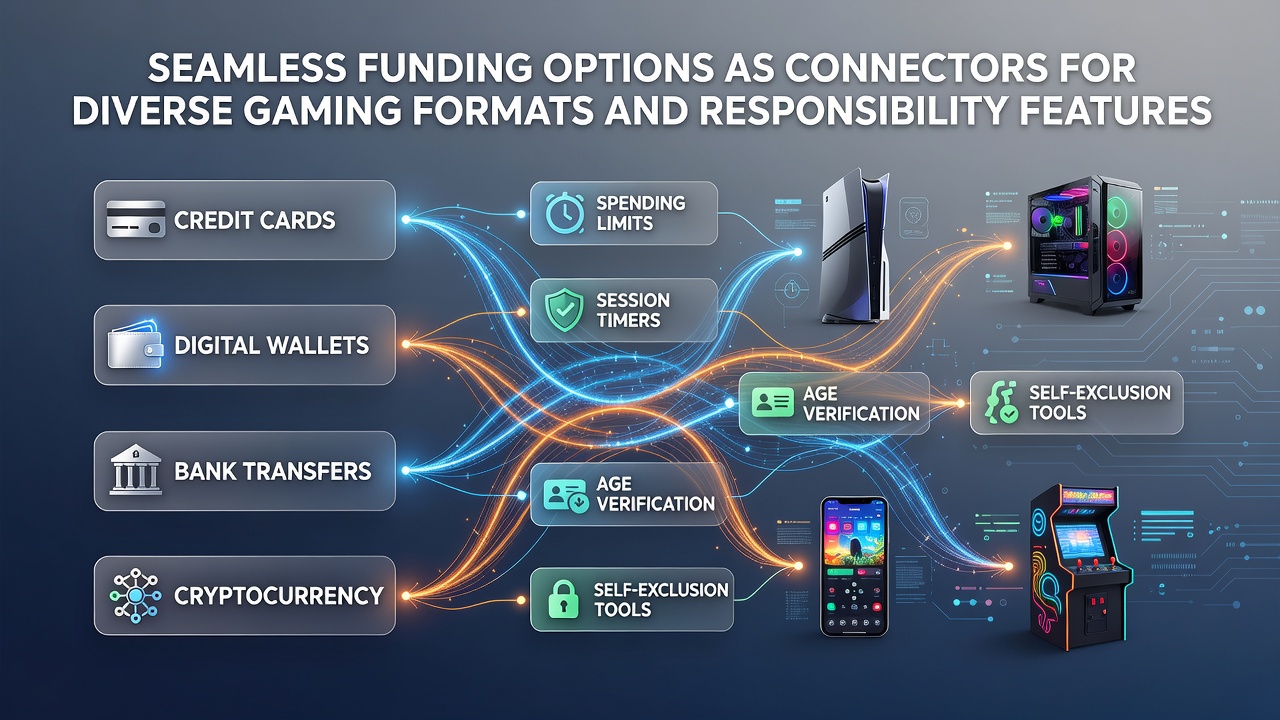
Figures released by regulatory bodies in several Canadian provinces reveal that platforms using embedded payment controls recorded higher compliance rates with voluntary exclusion requests during the first half of 2026. The same reports note that users who activated reality-check reminders through the funding interface tended to complete fewer consecutive sessions compared with those who relied on game-level prompts alone. In August 2026, several state-level agencies in the United States began reviewing similar payment-based controls as part of broader responsible gaming frameworks, citing data that showed faster response times when limits were managed at the transaction stage.
Operational Examples Across Regions
Take one operator active in multiple European markets that routes all deposits through a central wallet; users can move from video slots to live dealer blackjack and then place a wager on a tennis match while the same spending limit applies throughout. Another example comes from an Australian-facing platform that added instant bank transfers with built-in loss alerts, allowing players to receive a notification before funds clear if their weekly cap approaches. These cases illustrate how funding systems act as gatekeepers that enforce rules without interrupting the flow between different gaming experiences.
Industry associations such as the American Gaming Association have published summaries showing that operators who adopted unified payment rails reported fewer disputes over limit enforcement because the controls sit at the account level rather than within individual game servers. Data from these summaries also indicate that average transaction values remained stable even after responsibility features were added, suggesting that the added checks did not reduce overall activity volume.
Technical Requirements and Future Adjustments
Payment providers must maintain API connections that push real-time data on balances and limits to every game server, which demands low-latency infrastructure capable of handling thousands of simultaneous checks. Developers achieve this by embedding compliance logic inside the wallet software itself so that game clients receive pre-approved transaction amounts only. Updates scheduled for late 2026 aim to expand these connections to include cryptocurrency rails in certain jurisdictions, although current implementations focus primarily on traditional banking channels and e-wallets.
Those who have studied system logs observe that error rates drop when funding platforms handle verification steps centrally, because duplicate checks across separate game engines are eliminated. The approach also supports cross-format bonus tracking, where a single promotional credit can apply to slots, tables, or sports bets according to operator rules while still respecting any attached wagering requirements or time limits.
Conclusion
Integrated payment systems continue to serve as the structural link that lets operators offer slots, table games, live dealers, and sports betting from one account while maintaining consistent responsibility tools at every step. Regulatory reviews underway in multiple regions during 2026 focus on how these connectors can further standardize limit enforcement and session monitoring without creating separate processes for each vertical. The pattern shows funding infrastructure moving from simple transaction handlers to comprehensive platforms that manage both access and safeguards across the full range of gaming formats.